
Frank Lloyd Wright is arguably the greatest American architect. Designing over 1,000 buildings, he pioneered the Prairie Style. His work always maintained a strong connection to nature, which was his greatest influence.
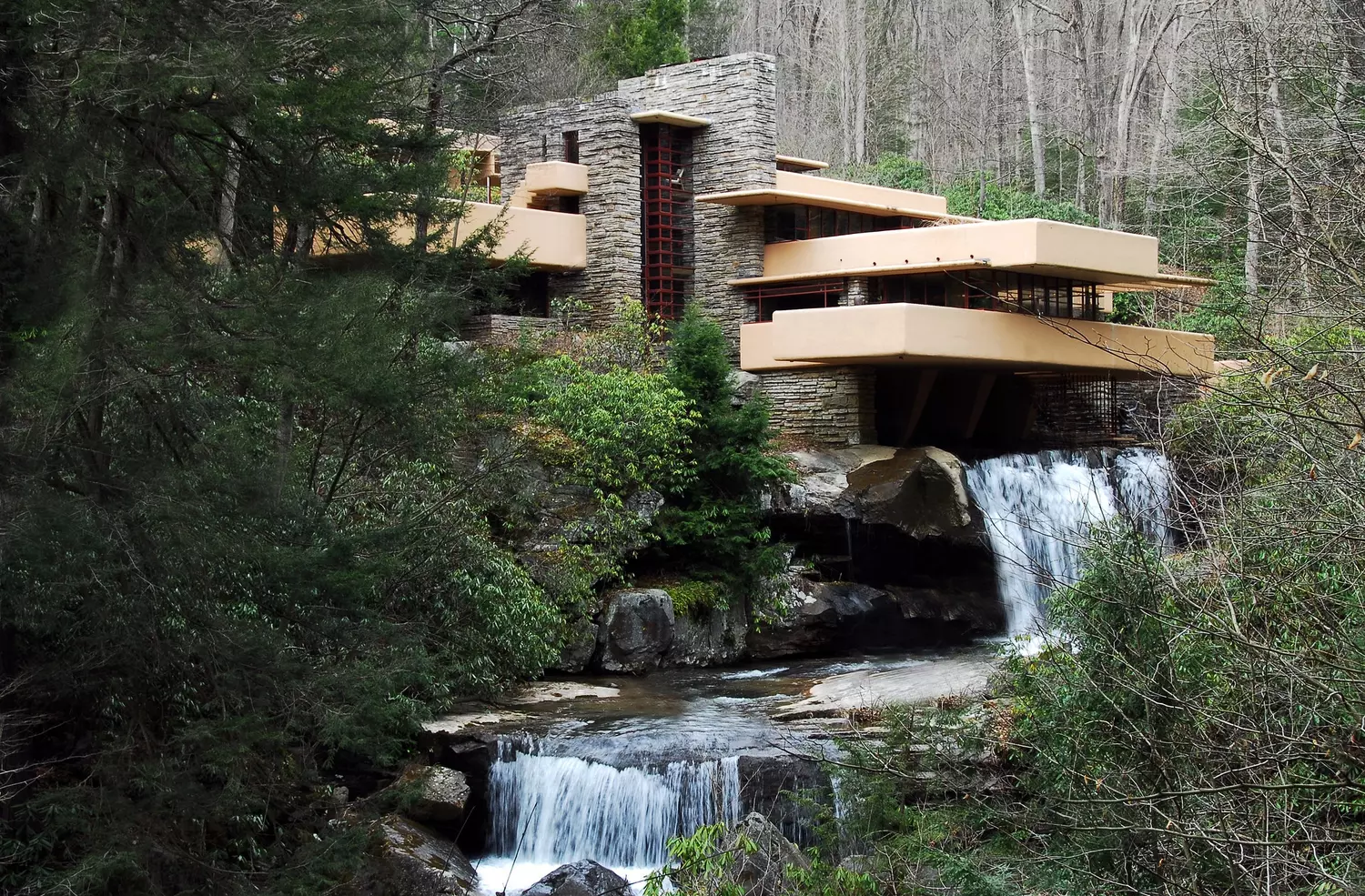
Perhaps Wright’s most famous home design, Fallingwater was designed in 1935 for a couple in Mill Run, Pennsylvania. These days it's a National Historic Landmark and it is listed among Smithsonian's "Life List of 28 Places to See Before You Die." It is built partly over a waterfall on the Bear Run river, and designed to meld with the natural environment.
One of eight Wright buildings that collectively make up an entry on the UNESCO World Heritage List, Hollyhock House was the architect’s first Los Angeles Commission. Built between 1919 and 1921, it was an ode to California’s freedom and beauty.
Located in Florence, Alabama, the Rosenbaum House is an example of another architecture style developed by Wright—Usonian. This style of home was conceptualized with middle class Americans in mind; it’s a bit smaller than some of Wright’s other work, and has less ornamentation. The Rosenbaum House was built in 1939 and 1940.
Home to the Johnson Wax headquarters in Racine, Wisconsin, this national historic landmark features "lily pad" columns and other innovations. Because the building was located in an unsightly industrial area, Wright wanted to create a light-filled space that emulated nature. The main building opened in 1939 and a tower was constructed later, opening in 1950.
Wright built Taliesin West in Scottsdale, Arizona, to serve as his winter home and studio. Included on the UNESCO list, the low-slung buildings are meant to echo the expansiveness of the desert. Established in 1937, the complex was added to and modified over many successive years. Today it serves as the home of the Frank Lloyd Wright Foundation.
One of the last buildings Wright designed, the Kalita Humphreys Theater is the only theater he designed. It was built along Turtle Creek for Dallas Theater Center, which still performs original productions on the building’s revolving stage. The theater is built into a limestone bluff and cantilevered over a heavily wooded site near the creek.
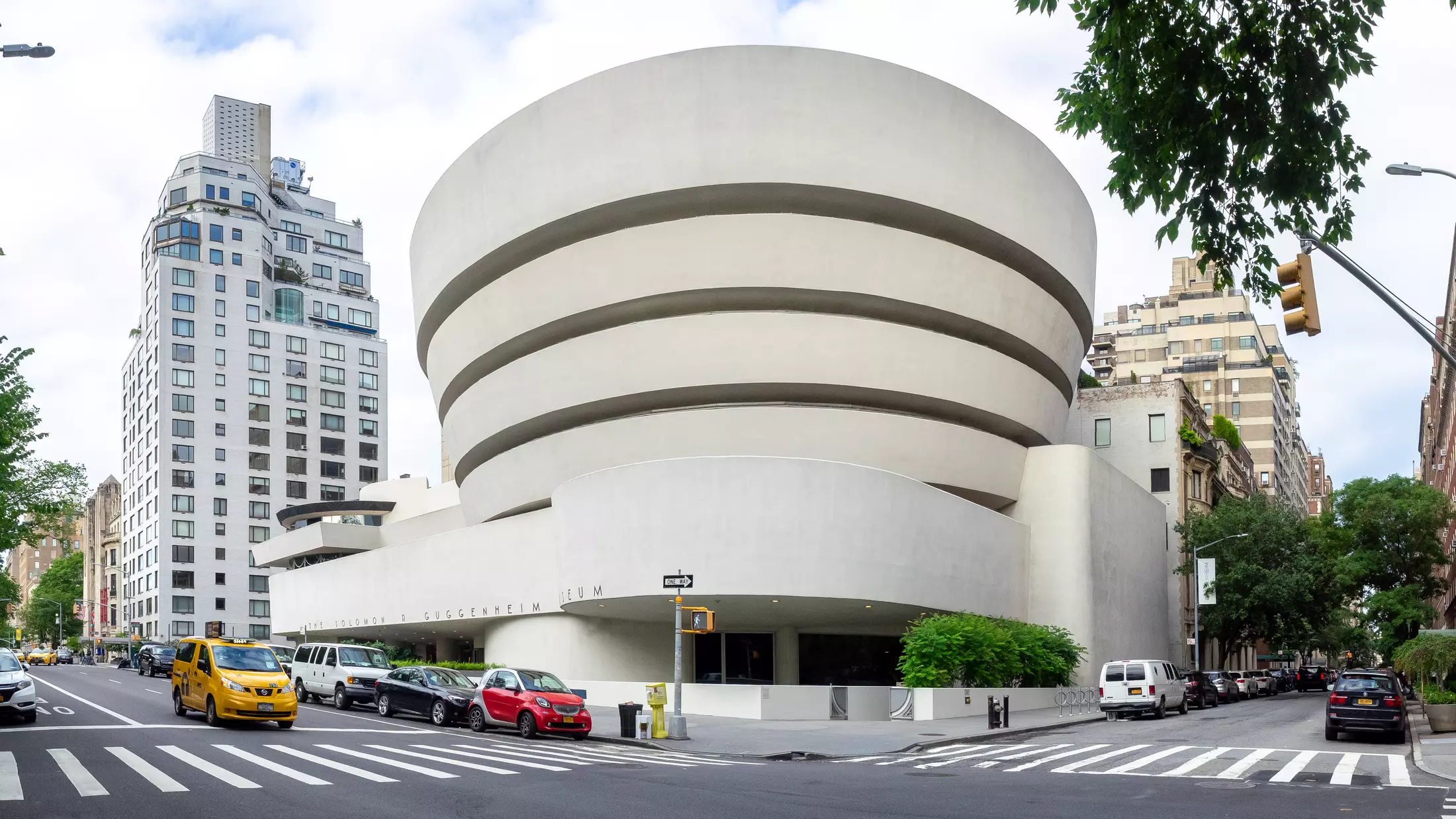
One of America’s most well-known art museums, The Guggenheim, was also designed by Wright. Its unmistakable circular form looms over 5th Avenue in New York City’s Upper East Side, drawing hundreds of thousands of visitors each year. Plagued by design and